Details
- Home
- Details
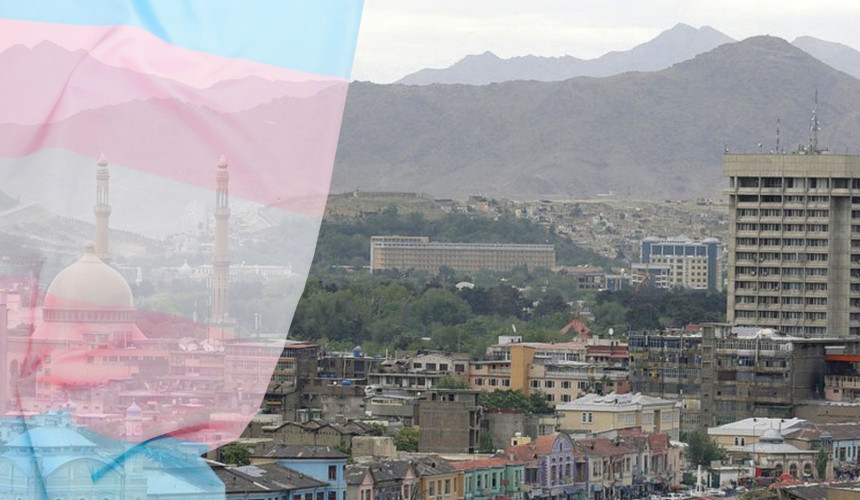
Bahar, a 47-Year-Old Transgender Woman: A Life in the Shadow of Discrimination and Deprivation
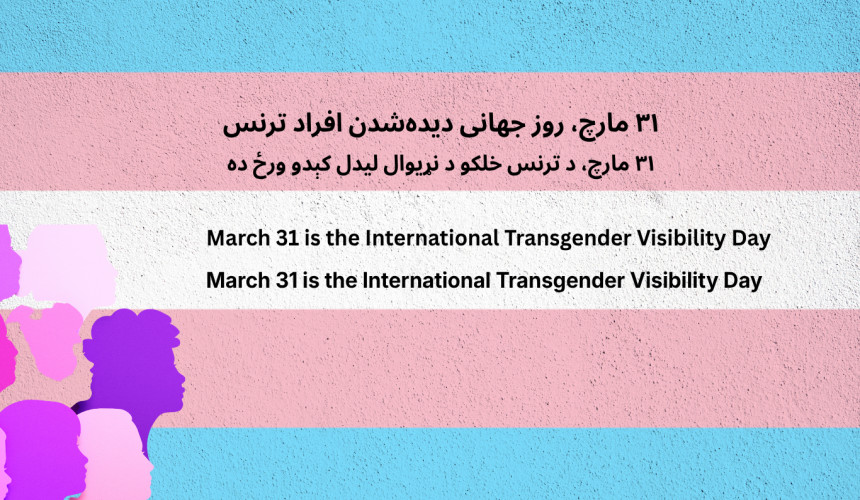
On the Occasion of the International Transgender Day of Visibility
Bahar (pseudonym), a 47-year-old transgender woman, has spent a significant portion of her life under the shadow of discrimination, violence, and deprivation. Today, as a result of severe physical injuries and sustained social pressures, she faces acute economic hardship and is at times compelled to resort to begging in the city of Kabul. Bahar’s life story stands as a documented and deeply distressing account of individuals who, due to their gender identity, are systematically deprived of their most basic human rights within a society structured around discrimination.
At birth, according to official records, Bahar was registered as male in a family of four children. However, her behavioral and physical characteristics—including her manner of walking, a soft voice, and a preference for different forms of dress—distinguished her from others from an early age. She recounts that during childhood, she attempted to suppress part of her identity in order to conform to her family’s expectations of masculinity and to avoid disappointing them. Over time, however, these differences became increasingly visible, and her family—reluctantly—was confronted with a reality they neither accepted nor were willing to acknowledge publicly.
In 1996, at the age of 17, her family was displaced to Balkh province due to the internal conflicts in Afghanistan. This displacement marked a turning point in Bahar’s life. There, for the first time, she encountered others with similar lived experiences. She heard the term “transgender” for the first time and came to understand that an identity existed beyond the imposed definitions—one that aligned with her inner reality. Nevertheless, fear of exposure and its consequences forced her to conceal this realization. Years of searching, learning, and reflection led her to the understanding that her identity as a transgender woman was an inseparable part of her being, not a choice subject to change.
As she gradually embraced her true identity, Bahar developed a deeper understanding of the value and meaning of her feminine traits. However, living with this identity in a society such as Afghanistan entailed profound risks and restrictions. She was denied access to higher education and was subjected daily to ridicule, humiliation, and verbal abuse. Others addressed her with derogatory language and rejected her presence in society. Under such conditions, she spent years attempting to navigate a fragile balance between survival and the concealment of her identity, while seeking ways to meet her most basic needs.
In 2019, under intense family pressure, Bahar was forced into marriage with a woman—an arrangement fundamentally incompatible with her true identity. Despite this, through mutual understanding between the two parties, the marriage ended after eight months in order to prevent further harm to either individual. In 2022, she formed a relationship with a person from Herat province that was aligned with her identity and emotional reality; however, due to serious security threats, they were compelled to keep the relationship hidden.
Following the Taliban’s return to power, Bahar’s living conditions deteriorated dramatically. She lost her job and was forced to return to her father’s home. In January 2022, during house-to-house search operations, her residence was inspected. Following a report by a neighbor regarding her identity, Taliban forces arrested Bahar without any form of investigation or legal process and transferred her to a detention facility in the city of Mazar.
During her detention, Bahar was held in inhumane conditions—in a cold room without basic necessities. She was subjected to repeated and severe physical torture and, according to her testimony, was also repeatedly exposed to serious forms of violence, including sexual violence. These abuses resulted in grave physical injuries, including bone fractures and severe damage to her hand, to the extent that even years later she has not regained full use of it, significantly limiting her ability to work.
Medical and social documentation recorded by the organization “Rainbow Afghanistan” confirms that Bahar suffers from profound physical and psychological trauma. In addition to her experience of detention and torture, she has repeatedly faced threats and harassment in public spaces. In one instance, while attempting to make a purchase at a local shop, her identity was reported to armed individuals, and she was directly threatened; although in that case, the intervention of some local residents prevented further escalation of violence.
Today, Bahar lives temporarily with her sister’s family in Kabul. Severe economic hardship, limited employment opportunities, and ongoing systemic discrimination have placed her in an extremely vulnerable position . Under such circumstances, she is at times forced to beg in order to meet her basic needs. Documentation held by “Rainbow Afghanistan” clearly substantiates her condition and demonstrates how years of discrimination and violence have deprived her of much of her life and potential.
Bahar’s story is a stark reflection of the lived reality of many transgender individuals in Afghanistan: a convergence of structural violence, exclusion from education and employment, social marginalization, economic hardship, and deprivation of a life lived with human dignity. This account constitutes an urgent call to the international community and global institutions not to remain silent in the face of such widespread human rights violations, and to take immediate and effective action to protect the dignity, safety, and rights of transgender individuals.