Details
- Home
- Details
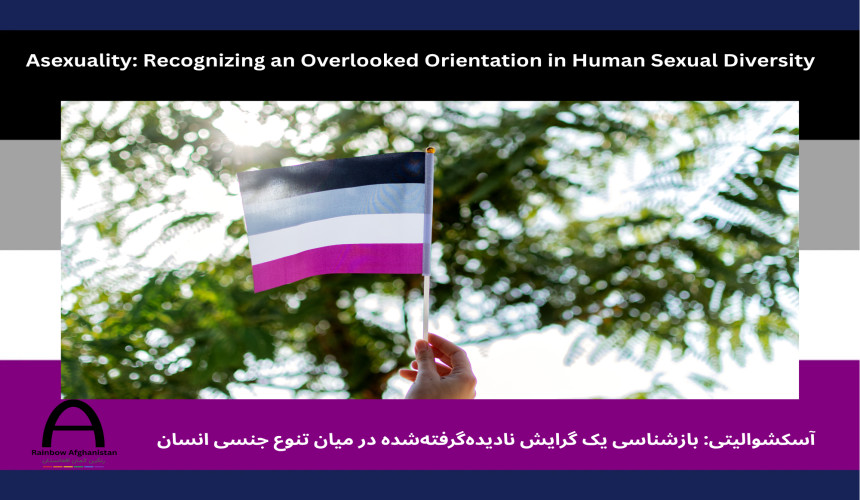
Asexuality: Recognizing an Overlooked Orientation in Human Sexual Diversity
Today, April 6th, marks “International Asexuality Day”, providing an opportunity to raise awareness, reduce social stigma, and strengthen the recognition of this identity worldwide.
Asexuality is a natural sexual orientation in which an individual experiences little to no sexual attraction toward others or has no interest in engaging in sexual activity with others. This definition encompasses a broad spectrum of experiences, ranging from those who almost never experience sexual attraction to those who may occasionally experience it under specific circumstances.
Extensive research has shown that asexuality is present among diverse populations and forms a part of the natural variation of human sexual orientations. The U.S. Library Studies Center highlights features of asexual experiences that reflect this diversity.
Within the asexual spectrum, several important subgroups are widely recognized:
- Demisexual: Individuals who experience sexual attraction only after forming a deep emotional bond.
- Graysexual: Individuals who sometimes or rarely experience sexual attraction, positioning them between asexual and sexual orientations.
- Demiromantic: Individuals who feel romantic attraction only after establishing a deep emotional relationship; they may experience sexual or emotional attraction under specific circumstances.
From this perspective, asexuality refers to a “lack of inherent sexual desire or attraction,” not merely “the absence of sexual activity.” Many asexual individuals may have romantic, emotional, or even sexual relationships with others, but these relationships are not based on intrinsic sexual attraction.
Distinguishing Sexual and Romantic Attraction
Sexual and romantic attractions differ in nature and in the types of feelings individuals experience toward others:
- Sexual Attraction: The desire to engage in sexual activity or closeness with another person.
- Romantic Attraction: The desire to form an emotional, romantic, or affectionate relationship, which does not necessarily involve sexual desire.
Research in gender studies indicates that these attractions can exist independently. In other words, a person may experience romantic attraction without sexual attraction (as seen in some asexual individuals), or conversely, may experience sexual attraction without forming a deep emotional bond. This distinction is crucial in scientific literature for a better understanding of the range of human sexual orientations and for differentiating sexual and emotional identities.
Asexuality vs. Other Conditions of Low Sexual Desire or Sexual Disorders
Asexuality is fundamentally different from celibacy, which involves the deliberate choice to abstain from sexual activity. In asexuality, sexual desire is inherently low or absent, rather than resulting from a conscious decision to refrain from sexual activity. Typically, this orientation exists from birth or early life and is not associated with mental health problems or psychological disorders.
In many cases, asexuality is distinct from low sexual desire resulting from psychological trauma or conditions such as trauma or depression. Asexuality is defined as a stable identity in which the individual consistently does not experience sexual attraction, whereas low sexual desire caused by trauma or depression is a changeable, treatable condition often accompanied by distress, stress, or impaired functioning. In other words, asexuality is a stable identity, whereas reduced sexual desire due to trauma or depression is a condition that may require psychological support and intervention.
Another important distinction is that asexuality differs from sexual desire disorders such as HSDD (Hypoactive Sexual Desire Disorder). Asexuality is a natural orientation in which the individual does not experience sexual attraction on a consistent basis, without being classified as a disorder or pathology. In contrast, sexual desire disorders such as HSDD are medically and psychiatrically defined and are associated with reduced sexual desire along with distress and impairment in daily life. These disorders may arise from psychological, biological, or environmental factors.
Challenges of Identity for Individuals with Minority Sexual Orientations
Individuals with non-heterosexual orientations—those that do not align with prevalent social norms—often face shared and deeply impactful experiences during childhood and adolescence. These experiences, rooted in cultural, institutional, and interpersonal structures, are generally categorized into three main dimensions:
- Feeling Different
Awareness of a minority sexual orientation often begins with a profound sense of being "different." According to findings from the American Psychological Association (APA), primary sexual attractions that shape adult sexual identity typically emerge from mid-childhood to early adolescence. However, many individuals who later identify as gay, bisexual, or asexual report that years before any sexual experience or identity labeling, they already felt "different" from their peers. This sense of difference can lead to significant confusion and social isolation, especially in societies where heterosexuality is considered the sole "norm."
This experience can be even more pronounced for asexual individuals. Studies indicate that in an allonormative culture, which emphasizes sexual attraction, asexual individuals often feel "broken" or that there is a "deficiency" in themselves because they do not experience sexual attraction toward others. The Asexual Visibility and Education Network (AVEN) notes that this sense of being different typically begins in middle or high school, when peers begin expressing sexual interest and entering romantic relationships.
- Pressure to Marry
One of the primary stressors for individuals with minority sexual orientations is social pressure to enter heterosexual relationships and marriage. According to APA reports, prejudice, discrimination, and societal insistence on conforming to heterosexual norms compel these individuals to conceal their true identities. The reports emphasize that restrictions on recognizing relationships (such as the non-recognition of same-sex marriages) and stereotypes about the "naturalness" of heterosexuality directly increase psychological pressure.
For asexual individuals, this pressure is often even greater. Beyond the general expectation to marry heterosexually—which affects other sexual minorities as well—these individuals face specific comments such as "You just haven't found the right person" or "You should check your health." AVEN documentation shows that these social and familial pressures often push many asexual individuals toward unwanted sexual relationships or marriages, with serious psychological consequences including deep trauma, feelings of self-betrayal, and depression.
- Being Misunderstood
Lack of understanding from family, friends, community, and even mental health professionals is one of the most persistent and damaging experiences shared among sexual minority individuals. APA sources clearly document that prejudice and discrimination leave profound negative psychological effects. Misconceptions such as being "mentally ill" or "incapable of maintaining stable relationships" still exist, leading to systematic misunderstanding and misrecognition of minority individuals. Notably, even among professionals, homosexuality was classified as a mental disorder until 1975, illustrating the deep institutional misunderstanding in the past.
In the case of asexuality, misunderstanding can be even more severe. Brotto et al. (2010) found that mental health professionals often lack adequate training regarding asexuality and may confuse it with sexual desire disorders such as HSDD. The key distinction is that asexual individuals are not distressed by the absence of sexual attraction (unless due to social pressure), whereas individuals with sexual desire disorders experience personal distress. To address this, Yule et al. (2017) developed the Asexuality Identification Scale (AIS) to accurately distinguish asexuality from other clinical conditions. The existence of such an assessment tool itself underscores the serious challenge of being misunderstood in this population.
Global Prevalence and Recognition
Asexuality is a relatively rare phenomenon, reported in some population studies to affect less than 1% of the global population. To raise public awareness and scientific recognition of this orientation, April 6th has been designated annually as Asexuality Awareness Day. This day not only provides an opportunity to celebrate the identities of asexual individuals but also signifies recognition of this orientation by the medical and scientific community.
Over the years, research and scientific reports have clearly shown that asexuality is neither a psychological disorder nor an illness, and should not be confused with mental health issues or reduced sexual desire due to specific conditions. Nevertheless, in many societies—especially where there is limited scientific understanding of sexual orientations—many asexual individuals live in silence. Fear of judgment, labeling, or rejection leads many to conceal their identities.
For many asexual individuals, this experience is not merely a theoretical concept but an integral part of daily life:
- Feeling different among peers,
- Responding to repeated questions about marriage,
- Struggling to explain something that others find difficult to understand.
In such contexts, social and familial pressures can be immense. In some cases, these pressures result in unwanted marriages—relationships formed not on mutual understanding but imposed societal norms. Research has shown that such relationships are often accompanied by dissatisfaction, emotional tension, and internal conflict.
Ultimately, what matters is acknowledging and understanding this simple truth:
- Asexuality is part of the natural diversity of human sexuality.
- It is neither a choice, a problem, nor something to be "fixed."
Raising awareness, fostering open dialogue, and promoting a more humane perspective can pave the way toward a society where individuals can live their authentic selves without fear.
References:
1. https://www.britannica.com/topic/asexuality?utm
2. https://www.asexuality-handbook.com/home
4. https://www.medicalnewstoday.com/articles/327272?utm
6. https://pubmed.ncbi.nlm.nih.gov/31799860/