Details
- Home
- Details
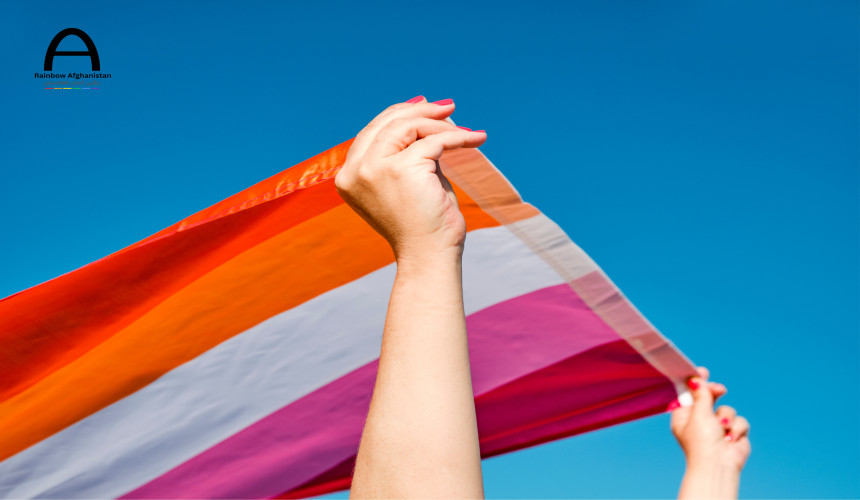
International Lesbian Visibility Day (April 26): Identity Recognition in the Shadow of Erasure
April 26 is observed globally as “International Lesbian Visibility Day.” This day serves as an opportunity to raise public awareness about the identities, experiences, and challenges of lesbian women in different societies. Its main purpose is to reduce social stigma and to recognize women who often live in silence, on the margins, and in concealment. The day is also seen as a symbol of resistance, love, and identity in free and inclusive spaces.
However, in many patriarchal societies, lesbian women are still deprived of equal rights and opportunities. They are significantly less likely than gay men to openly disclose their identity in workplaces and public spaces, and in many cases are forced to conceal who they are.
A study published in Springer Nature1, based on a review of 19 scientific articles, shows that lesbian women, due to the simultaneous experience of gender discrimination and discrimination based on sexual orientation, face “social invisibility” more than others—particularly more than gay men. This condition leads to their experiences being less visible and less independently studied.
In a country like Afghanistan, however, the concept of “visibility” takes on a completely different and dangerous meaning. In spaces dominated by fundamentalist groups, “being seen” is not an opportunity for liberation or self-expression, but rather a direct threat to an individual’s safety, freedom, and even life. In such an environment, sexual and gender minority identities are severely repressed, and punishments can range from social exclusion to physical violence and even execution.
In Afghanistan, “International Lesbian Visibility Day” is less a celebration and more a statement of survival. Lesbian women in Afghanistan live in the shadows and in fear of exposure, fighting every day to preserve their lives and dignity, while their experiences and suffering are often ignored. This day serves as a reminder of the urgent need for covert support systems, safe networks, and pathways to protection and escape from danger for them.
Lesbian: Recognizing an Identity
A lesbian is a woman who experiences emotional, romantic, or sexual attraction toward other women. This sexual orientation is part of the natural diversity of human behavior and has existed across all cultures throughout history.
A study conducted by the international research firm Ipsos2 shows that around 9% of adults across 30 countries identify themselves as being on the LGBTQ+ spectrum, and among them, 3% identify as lesbian or gay. The findings of this study indicate that the level of disclosure and visibility of lesbian identity is comparatively lower among some groups, and lesbian women remain a minority in many countries. In addition, significant differences are observed among these 30 countries, with the proportion of LGBTQ+ individuals ranging from approximately 4% to 15%.
However, these statistics represent only the tip of the iceberg. In societies with severe social, security, and religious restrictions—such as Afghanistan, where disclosing one’s identity can mean losing one’s life and livelihood—open self-expression is not possible. As a result, many individuals are not fully reflected in such studies. Lesbian women in such contexts are “hidden statistics”: they exist, but they are not seen.
Two Attractions, One Reality
To understand the experiences of lesbian women, it is important to distinguish between two types of attraction:
Sexual Attraction: The desire to engage in sexual relationships or physical intimacy with another person.
Romantic Attraction: The desire to form an emotional, affectionate, and romantic bond with someone, which does not necessarily involve sexual desire.
Research shows that these two forms of attraction can exist independently of one another. A lesbian woman may feel deep love and emotional attachment toward her partner, while her sexual experiences and expressions may vary. For many of these women, emotional connection and mutual understanding take priority over physical attraction alone.
This distinction is significant in scientific literature for better understanding the diversity of human orientations and for differentiating between sexual and romantic aspects of identity.
Lesbian Identity in Relation to Other Identities
To avoid common misunderstandings, it is useful to distinguish between different identities:
Lesbian vs. Gay: Both refer to attraction to the same sex, but lived experiences differ significantly between women and men. In patriarchal societies, lesbian women face a double burden—both gender-based discrimination and discrimination based on sexual orientation.
Lesbian vs. Bisexual: A bisexual woman is attracted to both genders, while a lesbian woman is exclusively attracted to women.
Lesbian vs. Transgender: Lesbian refers to sexual orientation, while transgender refers to gender identity. A transgender woman can be lesbian if she is attracted to women.
The Heavy Shadow of Minority Status: Psychological Challenges
The Minority Stress Theory3, widely supported in social psychology, explains that individuals living in discriminatory societies are chronically exposed to elevated levels of stress, which directly affects their mental health.
Research shows that lesbian, gay, and bisexual (LGB) individuals are at higher risk of mental health difficulties compared to heterosexual individuals. This difference is not due to sexual orientation itself, but rather to social pressures and discrimination. The study further indicates that experiences of stigma, expectation of rejection, concealment of identity, and internalization of negative societal attitudes contribute to chronic stress among minority groups.
Alongside everyday life challenges, this social stress increases the risk of depression, anxiety, and other mental health conditions. At the same time, social support, self-acceptance, and connection with affirming communities can significantly reduce the impact of these pressures.
A lesbian woman shares in her narrative that, due to her sexual identity, her life has been deeply affected by severe family and social pressures. She has consistently faced discrimination, fear of being exposed and rejected, and structural violence, all of which have collectively impacted her mental health and overall quality of life.
Scientific data with PMID4 references confirm this harsh reality: a large-scale study conducted on more than 53,000 students across 13 countries shows that homosexual individuals (lesbian and gay) are at a significantly higher risk of mental health disorders such as major depression, generalized anxiety disorder, and panic disorder compared to heterosexual individuals.
This research, published in the Journal of Psychiatric Research5, indicates that the likelihood of experiencing these conditions among homosexual individuals is up to 2.7 times higher than in the general population. However, an important finding is that in countries with higher levels of social acceptance, this mental health gap significantly decreases. These results therefore suggest that differences in mental health within this group are not inherent, but are strongly shaped by social conditions, discrimination, and the level of acceptance within society.
Afghanistan: Gender Apartheid
The situation in Afghanistan, particularly for women and individuals with diverse sexual and gender identities, goes beyond the theoretical framework of “minority stress” and has been described by some international observers and institutions as “Gender Apartheid.”
Gender apartheid refers to a system of institutionalized and systematic oppression and discrimination in which individuals, particularly women and girls, are deliberately deprived of fundamental rights, freedoms, and social, economic, and political opportunities on the basis of their gender, and are subjected to structural domination and inequality.
Under the current legal framework under Taliban rule, particularly in the 2025 penal code, same-sex relations are explicitly criminalized, with the death penalty reportedly prescribed for such acts. Within this legal interpretation, a rigid reading of religious doctrine has also led to certain religious and sexual minorities being labeled as “apostates,” placing them at risk of severe punishment.
In this context, human rights reports, including those by Human Rights Watch (HRW6), have stated that in 2025 the Taliban carried out at least four public executions. During the same period, 414 individuals (including 83 women) were subjected to public flogging. Although not all cases have been individually documented, human rights activists report that charges related to “morality” and “homosexuality” are among the most frequently cited grounds for such punishments.
Furthermore, a striking report from the International Lesbian, Gay, Bisexual, Trans and Intersex Association ILGA World7, presented at the UN Human Rights Council in March 2026, states: “Lesbian, bisexual, and transgender women in Afghanistan have not only been erased from public life, but are also deprived of the support systems meant to save their lives. Funding for organizations protecting these women has been cut.”
Life in Silence: Three Layers of Suffering
For a woman living in Afghanistan with a lesbian identity, daily suffering unfolds in three interconnected layers:
Layer One: The Feeling of Being Different
Awareness of one’s sexual orientation often begins in childhood with a deep, unnameable sense of “being different.” A girl who feels no attraction toward boys may not understand why her friends dream about marriage. In a society where even the word “homosexuality” is taboo, there is no space to ask questions or make sense of these feelings.
The story of Arzo, a lesbian woman who shared her experience with the organization “Rainbow Afghanistan,” reflects this stage. In her adolescence, without knowing the name for her feelings, she experienced emotional attraction toward the same sex—an experience that was unclear yet real.
At this stage, “being different” becomes an unspoken feeling that later develops into an awareness of identity. However, this recognition often marks the beginning of social and familial pressure.
Layer Two: Pressure for Forced Marriage
In Afghan culture, marriage is widely considered a near-obligatory social norm for girls. Within this context, pressure for forced marriage becomes one of the key forms of social control over women.
Bashira Paigham, in a qualitative study titled Dark Abyss Which Swallowed My Dreams, also highlights the lived experiences and challenges of lesbian, bisexual, and queer (LBQ) individuals in Afghanistan. Her findings show that the situation of LBQ people has significantly worsened. Alongside personal narratives of lesbian women, the study indicates that they face intense pressure from family and society to accept forced marriage.
Layer Three: Being Unheard and Lacking a Safe Space
After experiences of identity suppression and forced marriage, many lesbian women enter what may be the most painful stage of this journey: absolute loneliness. There is no family to talk to, no friends who understand, and no access to psychological or institutional support. In such conditions, individuals are not only exposed to external pressures but also to the accumulation of suppressed emotions within themselves.
For instance, “Sahar,” a lesbian woman currently living in precarious migration conditions in Pakistan, is in a situation where both her identity and her safety are at risk. She has no possibility of living openly and no real access to psychological or social support.
As also noted in a report by ILGA World, even the limited existing support systems for lesbian women are being reduced in many contexts. This indicates that the gap between the real needs of these women and available support structures remains deep and concerning.
Two Worlds, One Date
In free countries, April 26 is a day for marches, celebrations, and sharing stories on social media. In the United Kingdom, the day is observed with a focus on the health and well-being of lesbian communities. In South Korea, organizations such as ORIZIP host gatherings and events for lesbian individuals.
But in Afghanistan, the meaning of Visibility Day is reversed: it becomes a reminder of survival—“Stay alive. Stay hidden. But know that you exist.”
On International Lesbian Visibility Day, Rainbow Afghanistan once again calls on the international community to cooperate in creating effective underground support networks and to facilitate safe pathways for asylum in order to protect the lives and dignity of lesbian women.
In addition, the organization remains committed to documenting the harsh realities faced by this marginalized group, with the aim of amplifying their voices globally and preventing the continued invisibility of Afghan LGBTQ+ individuals.
Online links:
1- https://link.springer.com/article/10.1007/s12119-025-10355-y
3- https://pmc.ncbi.nlm.nih.gov/articles/PMC2072932/
4- https://pubmed.ncbi.nlm.nih.gov/40286461/
5- https://www.sciencedirect.com/science/article/abs/pii/S0022395625002560
6- https://www.hrw.org/world-report/2026/country-chapters/afghanistan
7- https://ilga.org/resources/hrc-session-61-ilga-world-2026/