Details
- Home
- Details
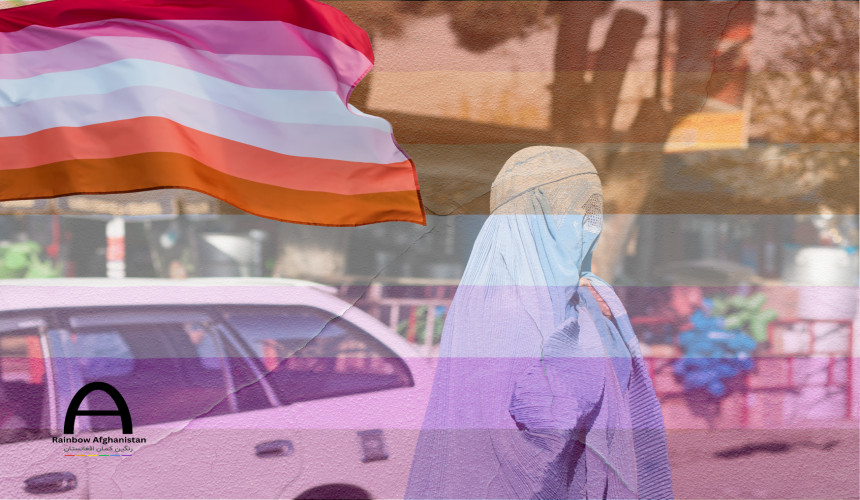
From Daykundi to Displacement: Sahar’s Story and a Life Lived in Denial
Sahar (pseudonym), a 31-year-old lesbian woman from Daykundi, knew from childhood that she was different—but even earlier, she realized she was living in a society that neither sees nor accepts that difference.
Her life is a story of “invisibility”—an invisibility she has paid for with violence, exile, and loneliness.
It was early in Hamal 1374 (March–April 1995) when Sahar was born into a modest family in Daykundi. Their home was simple: mud walls, a small courtyard, and a few fruit trees whose shade offered relief to the family during the hot summers. Sahar spent her childhood in dusty alleyways, simple games, and helping her mother with household chores.
However, what set her apart from many of her peers from her earliest years was her strong passion for studying. She says, “I used to hold my books and notebooks as if I were holding the most precious thing in the world.”
At school, she was an outstanding student, and her teachers showed her special affection and trust. Sahar always studied with great enthusiasm, as if each page of a book was a bridge to a distant, brighter world. She believed that through education she could reach a place where heavy, unfamiliar gazes would no longer disturb her—a place where she could simply be herself, without fear of judgment.
But in 2011, while she was in the ninth grade, a new feeling began to grow inside her—an emotion she could not fully understand at first. For the first time, her heart would beat faster for one of her classmates, a girl named “Bahar.”
This feeling was not like ordinary friendships; it was something deeper and more unfamiliar. Sahar felt both happiness and fear at the same time. She did not know what to call this feeling—she only knew that it was different from anything she had felt before.
When Sahar talks about those days after many years, a quiet smile still appears on her face—a smile that fades into the sadness in her eyes. She gently says:
“This feeling brought me closer to Bahar… I became friends with her. We were together every day, and sometimes we would visit each other’s homes.”
Those days were filled with excitement and hope for Sahar—moments when life seemed to have gained a new color. But at that time, she did not know that this simple and innocent closeness could one day turn into one of the most painful and heaviest memories of her life.
The Night the Home Fell Apart
Sahar’s mother was the first person who began to suspect that she was different and refused to accept her identity as it truly was. Perhaps it was because of the long, lingering looks Sahar gave Bahar, or the quiet, hidden smiles they exchanged behind closed doors.
Her mother told her father. And that same night, Sahar’s world collapsed forever; as if in a single moment everything shattered, and the home that was supposed to be a place of safety turned into a heavy and terrifying space.
Sahar still remembers the color of her father’s face. She says:
“My father’s face was so red, it looked as if blood was rising from beneath his skin. His voice still echoes in my mind—the voice that said: ‘You bad girl! Do you think you can ruin my honor with these filthy feelings?’”
Sahar still did not fully understand what was happening when she suddenly found herself on the ground. Both her parents had attacked her. The blows came one after another—fists and kicks, without pause. In her account, she recalls that moment as follows:
“My parents—the very people who had always been my safest refuge—threw me to the ground and beat me with their hands and feet. The blows were so severe that I was tossed from one corner to another. And no one heard the sound of my cries.”
But the violence did not end that night. The next day, Sahar was no longer allowed to go to school, step outside the courtyard, or speak to anyone. She was locked inside a small room at the back of the house—a room with a tiny window through which only a fragment of the sky could be seen.
For more than a year, Sahar remained in that room. She counted the days, stared at the walls, and sometimes cried silently for Bahar. Even her tears had to remain quiet, because if her mother heard her, she would face violence again.
When Education Became the Price of a Bargain
After more than a year of confinement in that small room, Sahar’s family placed a proposal before her—one that felt more like a transaction than a choice. They told her: “You can return to school, but only on the condition that you get married.”
Sahar knew very well that she had no feelings for men, and that this marriage would be nothing but an imposition and a profound lie. But she could see no other way forward. For her, education meant everything—more important than fear, loneliness, and even herself.
She remembered her books, covered in dust, and her mathematics teacher’s voice saying: “You can become a doctor.”
With a heavy heart, Sahar simply said: “I accept.”
Forced marriage pushed Sahar into a new and even more difficult phase of life. She moved from the confined space of her parental home to her husband’s house—a place with its own rules and pressures. Sahar says that during those days she felt trapped in a suffocating environment, and her only way to survive was to stay alive and keep going.
This marriage resulted in two children. She became a mother, but this motherhood was never accompanied by the feelings she had expected, as the relationship had been built on coercion from the very beginning. Deep inside, she constantly lived with pain, confusion, and emotional detachment.
Despite all the pressure, Sahar still held on to hope for continuing her education. She spent a long time trying to obtain permission to attend university, and eventually she succeeded. But even there, she was not safe from judgmental looks, social pressure, and the constant scrutiny of others, and she never experienced real peace.
Escape and Exile
One day, Sahar made her decision—a decision she had carried in silence for years. With trembling hands, she packed her suitcase. For a moment, her gaze rested on her children’s faces. She kissed them one by one, breaking a thousand times inside. Tears flowed uncontrollably, but she held back her voice in her chest. Then, without looking back too much, she left—as if between staying and leaving, all that remained was a suffocating grief slowly hollowing her from within.
In Afghanistan, a woman who runs away from her husband’s house is often left with no way back; her family rejects her, and society judges and labels her. But Sahar had already gone beyond these fears, because she had endured the heaviest pains long before this moment, and within that suffering, she felt she had nothing left to lose.
She went to Kabul at a time when the Taliban had not yet taken control of the country. There, she found Bahar again—the same girl she had fallen for years earlier at school. Now both of them were older, both marked by wounds. Yet their reunion felt to Sahar like a small opening of hope. They spent a few months together in Kabul—a simple, modest life, but one filled with a sense of calm.
However, with the arrival of the Taliban, everything changed overnight. Kabul was no longer the familiar city; the streets became heavy with fear, and a troubling silence settled over people’s lives. Every movement, every glance, every decision could become dangerous. For Sahar and people like her, this environment was not just unsafe—it was suffocating, a place where even breathing felt anxious.
In such conditions, staying was no longer an option. Every day brought new reports of threats, arrests, or disappearances, and the sense of insecurity grew stronger by the hour. They knew that if they stayed, there might be no chance left for survival. This collective fear, and the relentless pressure of living under constant danger, forced them to make a difficult but inevitable decision: to leave, even if it meant abandoning everything.
They were forced to leave Afghanistan and went to Iran. But life there was not easy either. Sahar says: “In Iran, we were neither Afghan, nor women, nor did we have an identity. It felt as if we were nothing.”
Yet the worst moment came when Bahar managed to leave for Finland, and Sahar was left alone again—in a foreign country, without money, without documents, and without anyone who understood her pain.
Sahar describes those days as: “It felt like someone suddenly took the oxygen out of my life… I couldn’t breathe.”
She says that after Bahar left, her days became identical. She would wake up in the morning with no motivation to begin the day. The city felt more alien than ever; even ordinary street sounds disturbed her. At night, she could not sleep, and if she did, she would wake up repeatedly with a heavy heart and sudden jolts of anxiety.
Pakistan: Between Shelter and Statelessness
After life in Iran became increasingly difficult, Sahar moved to Pakistan. At first, like many Afghan migrants, she lived without documents and in an irregular situation. Later, with the help of a relief organization, she was able to obtain a six-month visa and, for a brief moment, believed that perhaps this place could mark a new beginning.
But that hope faded quickly. Over time, pressure on Afghan migrants in Pakistan increased, and the environment became more difficult for them. Suspicious and negative attitudes in society, high housing costs, and the lack of job opportunities made life increasingly burdensome for Sahar.
Sahar says:
“When I came to Pakistan, I initially lived without legal documents. Later, with the help of a relief organization, I was able to obtain a six-month visa. But as the situation for Afghan migrants in Pakistan worsened, I was unable to extend my visa. At present, I live in hiding and I am registered with UNHCR, but I have no certainty about my future here.”
Now Sahar lives in a small rented room in Pakistan. Her neighbors do not know her and assume she is a single widow. Every morning she wakes up in fear; her mind is restless and her heart is heavy, and from the moment she opens her eyes, anxiety takes over everything. Every sound feels like a sign of danger—from the police to the unintended exposure of her identity.
She says: “My body is no longer able to work. Years of beatings, forced pregnancies, hunger during journeys, and homelessness have exhausted my soul. Sometimes I wish I had died the day I was first tortured; it would have been easier.”
But then she continues: “But no. I want to live. I just want, once in my life, to be somewhere where I can live with dignity without hiding my true self.”
Sahar is in debt for her rent and has been unable to pay it for months; the pressure from her landlord increases every day. She still holds hope for assistance from international organizations such as UNHCR, but so far she has received no response.
In this situation, she is not alone; hundreds of other women like her are also in Pakistan—waiting, living in silence and anonymity, and passing their days with fading hope.
In Conclusion
Sahar’s story is not just an individual narrative; it reflects the lives of hundreds of women and others who endure their existence in silence, caught between fear, threats, and a lack of protection. They face daily risks of being exposed, rejected by their families, subjected to social violence, and even threatened with death. In such circumstances, many are forced to hide their true identities, remain deprived of their most basic rights, and endure lives that resemble mere survival rather than living.
For many LGBTQI+ individuals in this region, seeking asylum is not a choice but the only way to stay alive. When no protective structures exist within the country, when the law fails to safeguard them, and when society does not accept them, leaving one’s home, family, and homeland becomes an inevitable decision.
In these conditions, facilitating the asylum process for LGBTQI+ individuals is an urgent and serious necessity. Many of them face threats, violence, and a lack of legal protection even in neighboring countries, and if returned or denied protection, they are exposed to grave dangers.
#VoiceOfSahar #LesbianWomenOfAfghanistan