Details
- Home
- Details
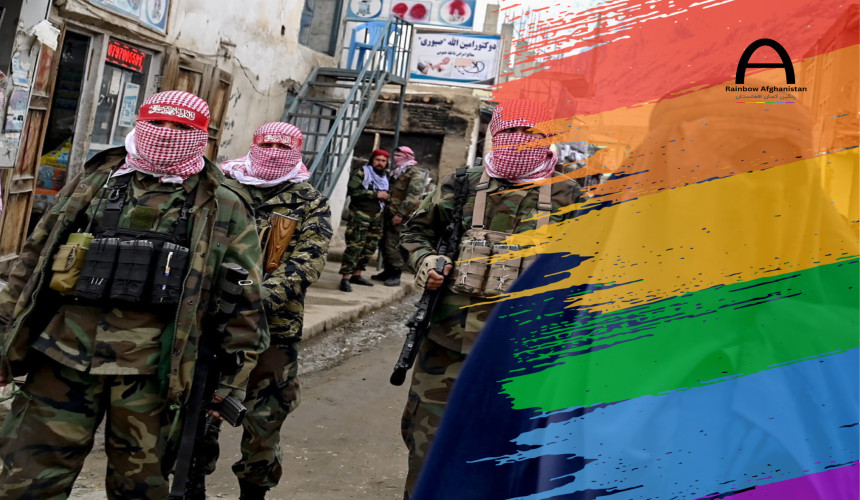
The Right to Work in the Shadow of Denial: The Conditions of Afghan LGBTIQ+ Individuals on International Workers’ Day
The first of May is celebrated in many countries as International Workers’ Day. This day commemorates the struggles of workers who protested to achieve the demand of “8 hours of work, 8 hours of rest, and 8 hours of life,” a principle widely recognized as one of the foundations of justice in modern labor systems. It is also a symbol of advocacy for fair wages and just working conditions.
Commemorating International Workers' Day cannot fully achieve its meaning without paying attention to the rights of LGBTIQ+ individuals, as they still face discrimination and violence in various workplaces.
In 2024, the International Transport Workers’ Federation ITF¹ published a report based on research conducted across five continents. The report shows that LGBTIQ+ workers continue to face discrimination in hiring and promotion processes, as well as harassment and pressure to hide their identities.
At the same time, International Workers’ Day in Afghanistan is marked by a heavy silence and limited attention, as the most urgent concerns for people in the country are immediate livelihood issues such as widespread unemployment and hunger.
Reports from the United Nations UN² and the World Bank indicate that Afghanistan’s economy in 2025 remains in a highly fragile condition. The country faces a high unemployment rate (around 75%) and widespread poverty (affecting over 90% of the population), with a large proportion of people dependent on humanitarian assistance.
The Taliban and the Increasing Employment Marginalization of LGBTIQ+ Individuals
Given this situation, concerns about the condition of LGBTIQ+ individuals and the psychological pressures they face due to the Taliban’s strict and restrictive policies, the criminalization of identity, and existing cultural taboos, increase.
In Afghanistan under Taliban rule, these individuals are not only deprived of the right to fair and dignified employment, but many of their basic and fundamental human rights are also violated, and even their identity and existence are considered a crime.
A report in The Lancet Global Health³ notes that LGBTIQ+ people in Afghanistan face “systematic neglect” and severe economic crisis, with extremely limited access to livelihood opportunities, employment, and essential services. This situation has pushed many of them into poverty, unemployment, and social marginalization, forcing them to struggle intensely to meet their basic needs.
In such an environment, the lack of legal and social support has further increased their vulnerability and significantly reduced their ability to participate equally in society.
In a society where discrimination and stigma against LGBTIQ+ individuals are deeply entrenched, access to decent employment opportunities is extremely limited or nearly non-existent. As a result, these individuals are pushed into conditions where survival itself is associated with serious risks and life at the most marginalized and vulnerable margins of society.
Informal Livelihood Activities for Survival
Based on available documentation held by the Afghanistan Rainbow Organization, a striking case regarding the situation of a transgender woman under the pseudonym “Bahar4” has been recorded. According to this information, Bahar lives in a highly fragile economic condition. She identifies the lack of employment opportunities for transgender women as one of the main factors behind her vulnerability—a situation that severely limits her access to a stable income.
As a result of these circumstances, she has been unable to secure sustainable employment and is at times forced into informal work and even begging in public spaces. This is despite the fact that before the Taliban takeover, Bahar had relatively better employment and was able to meet at least her basic living needs through her job.
These records illustrate how systemic discrimination against LGBTIQ+ individuals, structural unemployment, and the Taliban’s restrictive policies have pushed people like Bahar into extreme vulnerability, eliminating even the minimal opportunities for improving their livelihoods.
The Taliban and the Rising Employment Exclusion of LGBTIQ+ Individuals
In Afghanistan, especially after the Taliban came to power, the situation of LGBTIQ+ individuals has been marked by increasing threats, violence, and insecurity. As a result, many LGBTIQ+ workers have lost their jobs or been forced to leave employment and hide their identities, as being present in the workplace can expose them to risks of identification, arrest, or physical attack.
This situation has not only disrupted their working lives but has also pushed them further into social marginalization, effectively eliminating the possibility of stable employment.
A report by Human Rights Watch⁵ states that, due to extreme fear of the Taliban, direct threats, and increasing experiences of violence, many LGBTIQ+ workers in Afghanistan have been forced to leave their jobs or not return to their workplaces.
In many cases, even commuting to work has posed a risk to their lives , with the possibility of being identified, arrested, or attacked by the Taliban or members of the community. This pervasive insecurity has led some individuals to go into hiding, others to withdraw completely from work and social life, and has effectively erased any possibility of safe and sustainable employment for them.
The testimony of Fatima, a 26-year-old lesbian woman published by Outright International⁶, further illustrates how LGBTIQ+ women have been increasingly marginalized following the Taliban’s return. Fatima states that her life changed completely after the Taliban’s takeover. She, who previously worked at a local university, quickly lost her job and was replaced by a man affiliated with the Taliban.
However, the vulnerability of LGBTIQ+ individuals in Afghanistan is not limited to the current Taliban era. It is rooted in years of family and social rejection, structural discrimination, societal stigma, and the long-standing lack of safe employment opportunities for these individuals.
Forced Reliance on the Body for Livelihood
In another account shared with the Afghanistan Rainbow Organization, a transgender woman describes how, after being rejected by her family, she was forced to engage in informal and unregulated work in order to meet her basic survival needs- work that exposed her to multiple forms of violence, including sexual violence.
She explains that in such circumstances she had extremely limited options for survival, and continuing along this path was not a genuine choice but rather the result of the absence of safe and legal opportunities for work and life. At the same time, she emphasizes that this situation has worsened under Taliban rule, with significantly increased levels of insecurity and vulnerability.
When no other means of livelihood are available, LGBTIQ+ individuals may be pushed into activities such as dancing in informal gatherings and even sex work. This reality is a direct consequence of the lack of family support, restricted access to education, and the absence of safe employment opportunities, which together leave LGBTIQ+ individuals with severely limited and constrained choices.
In such conditions, these activities are not experienced as free choices, but rather as forced survival strategies undertaken in order to endure and stay alive.
Beyond Unemployment: Gender Identity–Based Employment Exclusion
Unemployment among LGBTIQ+ individuals in Afghanistan is not merely the result of general labor market conditions or a lack of job opportunities; rather, it is directly linked to gender identity and structural discrimination.
In other words, even when employment opportunities exist, access to them remains severely limited for these individuals due to prejudice and identity-based barriers, which further intensifies and reproduces their unemployment.
According to a transgender woman from Herat in an interview with the Afghanistan Rainbow Organization, she applied for a position in a government office after graduating from university and was invited for an interview. However, her appearance—which did not conform to expected gender norms, including the absence of a beard and presenting in alignment with her gender identity—provoked a negative reaction from the interview panel.
She was explicitly told that, regardless of her skills and qualifications, she would not be employed with such an appearance.
Economically, such forms of discrimination have significant consequences. In many cases, individuals face serious barriers to accessing employment, job loss, or exclusion from stable work opportunities due to their identity, appearance, or way of life. Some are pushed out of workplaces or forced to leave their jobs altogether.
In other cases, an unsafe social and professional environment restricts their ability to work freely or enter the labor market. As a result, these conditions lead to unstable incomes, economic dependency, and severe financial pressure in their daily lives.
Ultimately, the situation of LGBTIQ+ individuals in Afghanistan demonstrates that their unemployment and labor exclusion are not simply the result of a general shortage of opportunities in the labor market, but are directly connected to gender identity, structural discrimination, and social exclusion. Even where job opportunities exist, gender norms and prejudice severely restrict access, thereby reproducing cycles of unemployment and poverty.
In such conditions, many individuals are forced to resort to informal and high-risk survival activities—not as a matter of free choice, but as a consequence of the absence of family support, lack of protective systems, and severe social and political constraints.
Addressing this situation requires a multi-dimensional approach that includes both legal and structural reforms as well as social and protective measures. Ensuring anti-discrimination laws in employment, decriminalizing diverse gender identities, raising public awareness about the rights of LGBTIQ+ individuals, and ensuring equal access to education and employment opportunities can form part of structural solutions.
In addition, establishing economic support programs, providing psychosocial counseling services, and creating safe support networks for marginalized individuals can help reduce their vulnerability. At a broader level, social awareness-raising and reducing stigma against LGBTIQ+ individuals play a crucial role in transforming attitudes and building a more inclusive society.
Links
1-https://www.itfglobal.org/sites/default/files/node/resources/files/LGBT%2B_Workers_ITF_0.pdf
3-https://www.sciencedirect.com/science/article/pii/S2214109X23003169?utm_source=chatgpt.com
4- https://rainbowafghanistan.com/stories-details/10
5- https://www.hrw.org/news/2022/01/26/afghanistan-taliban-target-lgbt-afghans