Details
- Home
- Details
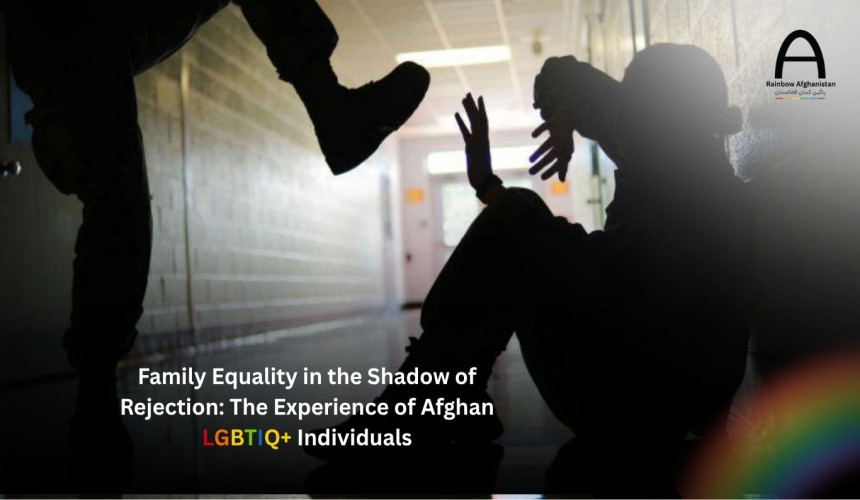
Family Equality in the Shadow of Rejection: The Experience of Afghan LGBTIQ+ Individuals
On International Family Equality Day, under the slogan ‘Love Makes a Family’, the idea of family as a social and emotional institution comes into sharp focus.
However, for many LGBTIQ+ individuals in Afghanistan, this concept is not experienced as a safe and accepting space, but rather one marked by silence, restriction, and insecurity. In such a context, family can simultaneously serve as a source of support and a source of pressure.
Despite these challenges, the family remains the first space in which LGBTIQ+ individuals may experience and express their identities , and family members are also the first people to influence the course of their lives. This influence, whether positive or negative, plays a decisive role in their mental health, sense of acceptance, and overall quality of life.
In such a context, any difference in identity or self-expression may be met with pressure, denial, or even rejection. However, when families move beyond these imposed norms and operate on the basis of acceptance and mutual understanding, they can become the safest and most supportive institution for individuals’ growth and mental well-being.
In a report published in the journal LGBT Health1, it is emphasized that families play a fundamental role in the health and life path of LGBTQ+ youth. The findings of this research indicate that family support, acceptance, and understanding can help improve mental health, increase the sense of security, and reduce risky behaviors among these young people.
In contrast, rejection, denial, or lack of acceptance by the family is associated with an increase in problems such as depression, anxiety, and suicidal thoughts.
However, in a context like Afghanistan, the situation is different. Numerous reports and evidence indicate that many LGBTIQ+ individuals in this country not only lack family support, but also face various forms of violence, rejection, and intense social pressures from their families.
For example, in the narrative published by the 'Rainbow Afghanistan,' Sahar's2 experience clearly demonstrates the reality of how domestic violence, emotional rejection, and social pressures can fundamentally affect the life path of LGBTQ+ individuals.
In this narrative, the home, instead of being a space of safety and support, becomes an environment characterized by physical violence, strict control, and prolonged restrictions; to the extent that the individual is deprived of access to education, social interaction, and even basic freedoms.
In this regard, a report published by Human Rights Watch3 also emphasizes the role of the family in the lives of LGBTIQ+ individuals in Afghanistan; however, this role is often negative and associated with pressure. Many of these individuals face violence, rejection, and forced marriage from their families and are compelled to conceal their true identities.
The report also shows that family obligations and having a spouse or children can make it difficult for some individuals to leave the country or can complicate their decision to migrate.
Chosen family: A network of support in the shadow of rejection
What binds members of a family together, more than anything else, is love, care, and mutual commitment, not merely genetic ties or societal norms; Therefore, for many LGBTIQ+ individuals, a 'chosen family' can serve the same emotional and supportive role as a real family, because these relationships are formed based on acceptance and understanding, rather than coercion or social expectations.
The concept of 'chosen family' in the lives of LGBTIQ+ individuals refers to a network of relationships that a person selects themselves based on trust, support, and mutual understanding—like close friends, a romantic partner, or community members. This type of family usually forms when a person has faced rejection, judgment, or lack of acceptance from their biological family.
In a report published by Human Rights Watch3, a transgender man who fled Afghanistan describes his experience of a “chosen family” made up of a close group of friends. He says: “There are 16 of them—now they are my family. I cannot leave them.”
This transgender man’s account illustrates how, in conditions of exile and the absence of biological family support, LGBTIQ+ individuals rely on informal networks of friends and allies for survival and emotional support, and how these relationships effectively function as a family for them.
However, some studies suggest that although ‘chosen family’ provides crucial emotional support and a sense of belonging, it may not produce the same long-term structural impacts on mental health as biological family support. 'Chosen family' plays an important role in emotional support, creating a sense of belonging, and reducing loneliness among LGBTIQ+ individuals; this type of support usually cannot have the deep, lasting, and structural impacts on mental health that biological families can.
For example, in some studies, including research by Chum and colleagues based on UKHLS4 data, it has been found that biological family support is associated with more significant improvements in indicators such as sleep quality and mental health, whereas support from chosen family does not show such a lasting effect.
This suggests that, despite the vital importance of friendships and informal support networks, the role of the biological family remains more prominent and influential in certain aspects of mental health—particularly in stress regulation and sleep quality.
Therefore, the relationship between biological family and chosen family cannot be understood as a simple “effective/ineffective” dichotomy. Rather, both exist along a complementary spectrum of social support: biological family, when accepting, can serve as a structured and stable source of mental health support, while chosen family often plays a compensatory, immediate, and vital role in situations of rejection.
In conclusion, the experiences of LGBTIQ+ individuals in Afghanistan show that family can simultaneously function as a source of support or as a source of rejection and harm. In situations where the biological family, due to social pressures, cultural norms, or structural violence, is unable or unwilling to accept an individual’s identity, many people are compelled to develop alternative support networks.
However, this fact should not be interpreted as normalizing family rejection, but rather emphasizes the need to strengthen a culture of acceptance, social awareness, and institutional support.
Links:
- https://pmc.ncbi.nlm.nih.gov/articles/PMC6551980/?utm_source
- https://rainbowafghanistan.com/stories-details/17
- https://www.hrw.org/report/2022/01/26/even-if-you-go-skies-well-find-you/lgbt-people-afghanistan-after-taliban-takeover?utm_source
- https://bmcpublichealth.biomedcentral.com/articles/10.1186/s12889-021-12308-0?utm_source