Details
- Home
- Details
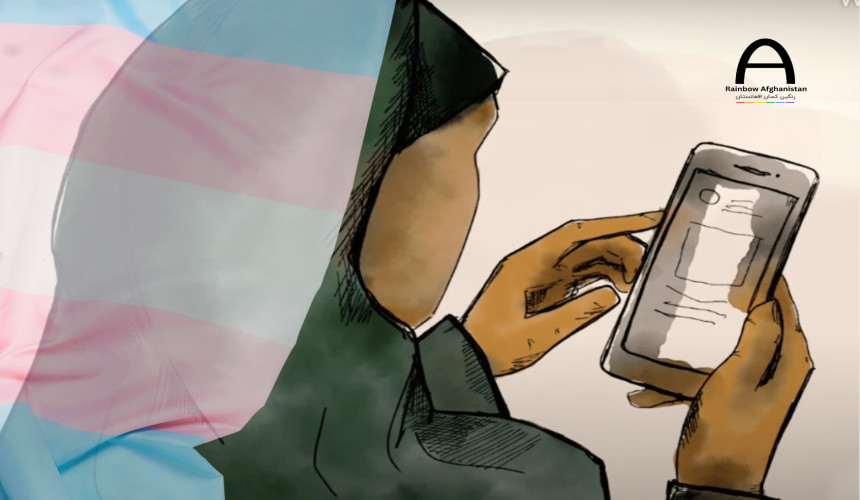
Zuleikha and the Struggle for the Right to Work and Identity
Kabul, Afghanistan
Zuleikha (a pseudonym), a 26-year-old transgender woman originally from Ghazni province and raised in Kunduz, has managed to graduate in Electrical Engineering from Ghazni University despite severe social and cultural restrictions. This achievement remains rare and difficult to attain for a transgender woman in Afghanistan.
However, her journey was not limited to education alone. For Zuleikha, every day of attending classes meant walking through a sea of judging eyes, whispered comments, and silent but painful mockery. She struggled not only with exams and academic demands, but also with a constant sense of being seen yet never accepted.
In a country where access to employment is already difficult for many young people, the situation is even more challenging for transgender individuals. Despite her higher education, Zuleikha faces not only unemployment but also systemic discrimination directly linked to her gender identity.
In this context, her achievement in higher education is not merely an individual success; it is part of a broader struggle for the right to work, human dignity, and visibility within society.
Nevertheless, Zuleikha’s life has never been easy. Throughout her journey—from school years to her attempts to enter the job market—she has consistently faced challenges rooted in her gender identity, ranging from social ridicule and exclusion to being denied employment opportunities.
Childhood; The First Experience of Differences
From the earliest years of her childhood, Zuleikha gradually began to sense that something within her did not align with the expectations of those around her. She describes this feeling as initially very vague—like a quiet emotion expressed through her everyday behavior, which she could not yet name.
«Around 2006, when I was only seven years old, I slowly began to realize that my interests, needs, and the way I behaved were different from what others expected of me. I was recognized as the son of the family and was expected to behave like a man—bold, tough, and in line with masculine standards, such as having a loud voice and doing the kinds of work expected from the head of the family. But inside, I was not like that.»
She recalls traits that were visible in her from childhood, such as a soft voice, delicate facial features, an interest in feminine appearance and clothing, and a way of walking and behaving that was more similar to girls than boys.
She further adds: «I spent most of my time playing games that are traditionally associated with girls, such as playing with dolls, and I had no interest in boys’ games like football. All of these signs gradually made me understand that my identity was feminine, not masculine, and that I am a transgender person.»
She says that when she came to understand her identity, she did not feel comfort or relief at first due to the negative attitudes of society and family, and she felt pressured by the judgment of others. However, over time, she came to understand herself better and gradually accepted her identity.
«When I realized I was transgender, at first I did not feel any sense of satisfaction and was even upset with myself because the views of my family and society were very negative and hurtful. Every time I went outside, I felt that my differences were visible, and this made me anxious.
For a while, I thought I might have a physical problem and tried to examine myself, but gradually I understood that this was part of who I am, not a defect. Over time, instead of denying it, I began to accept myself and slowly came to terms with my identity.»
Family; The First Mirror of Identity and Conflicts
The concept of “honor” and “reputation” in some traditional societies has led to LGBTIQ+ identities being viewed not as individual matters, but as issues tied to the family’s status and social standing. In such a structure, fear of public judgment and social disgrace often results in strict restrictions placed on these individuals by their families.
These restrictions can take the form of controlling movement, forcing concealment of identity, family rejection, and in some cases, emotional pressure and psychological violence.
Regarding this, Zuleikha says:
«My family members are relatively open-minded, and inside the house they do not have much problem with my trans identity or behavior. But outside the home, the situation is different. My father always told me to be very careful in public spaces and, as he put it, not to show any ‘abnormal’ behavior.
Outside the home and at school, I had a few friends who were also transgender women. Sometimes I talked to my father about them, but when he found out that I was friends with transgender women at school, he imposed even more restrictions on me.
My father’s argument was that such feminine behavior and friendship with transgender people could harm my reputation and my family’s social standing in society and at school. He insisted that I should befriend boys and participate in male activities such as football.
In the end, I became very frustrated with this situation and kept asking myself: who am I supposed to be friends with, and who am I supposed to play with? Especially since I had no interest in being with boys.»
From Disclosure to Rejection; The Consequences of Forced Exposure of Identity
Forced disclosure of identity marked the beginning of social rejection and violence for Zuleikha. She had a few friends in school who were similar to her, and she only felt safe and valued in their company, as they were the only ones who accepted her identity. However, the ridicule and verbal harassment from classmates and even some teachers were extremely heavy and suffocating for her.
She says:
«The psychological and verbal abuse from classmates and even some teachers at school in Kunduz made me feel deeply alienated. I was repeatedly insulted with degrading words. The situation became so unbearable that I decided not to stay in Kunduz after finishing school and chose Ghazni University to continue my education, because I thought the environment there would be more open.»
She further adds:
«My gender identity, ethnicity, and religion made me more vulnerable to discrimination and humiliation. Since childhood, I was friends with a person named Shahab Mohammadi, who was also a transgender woman. Later, another person named Sher Shah joined our group, but over time conflicts arose between them. These disagreements led to rumors being created and spread against me and my friends.»
She continues:
«On November 22, 2025, Sher Shah told someone in our area that we behaved in a feminine way, wore women’s clothing, and were ‘transgender’. After that, these statements spread throughout the neighborhood, and my identity was publicly exposed.
At that moment, I felt there was no safe place for me—not in the streets, not among peers, and not even at home. I expected rejection and humiliation from everyone around me, so I was constantly on alert, living in fear, as if at any moment something about me could lead to judgment or harm.»
From Pressure to Hope: Entering University
After completing school, Zuleikha decided to continue her education in Ghazni province, hoping that in a new environment she might be able to distance herself from social pressure and rediscover herself.
She was accepted into the Electrical Engineering program at Ghazni University and began her studies in 2020. According to her, the moment she heard the news of her acceptance felt like a deep breath after years of suffocation and silence—a mixture of joy, disbelief, and cautious hope.
In that moment, she imagined a future where she could work, become independent, stand on her own feet, and have the same respect, dignity, and social standing as others; a life in which her identity would not be an obstacle, but an accepted part of who she is.
Despite the difficult security situation and the shadow of conflict around the city, she tried to focus on her studies and her future. Within this context, her emotions were a blend of hope and fear—hope for a new beginning, and fear that the past might repeat itself.
Labor Market: The Visible Face of Discrimination for People Like Zuleikha
Zuleikha dreamed of being independent, working, earning an income, and building her life without fear of labels or judgment—a life where she could stand on her own feet. However, due to her gender identity, she was repeatedly denied job opportunities and experienced discrimination in her pursuit of independence.
She says:
“I graduated in 2023 from the Faculty of Electrical Engineering at Ghazni University, specializing in power distribution networks. Based on this qualification, I applied several times for positions in electricity companies. Eventually, I applied to the national electricity company (Breshna). I passed the online exam and was invited for an in-person interview on September 6, 2025.
On the appointed day, I went to the company’s central office in Kunduz city, where the interview panel included the head of Breshna, Mullah Shahidullah Nasim, and their engineers.
At first, the engineers asked me questions, and I answered them correctly. However, during the interview, they began paying attention to my manner of speaking, appearance, behavior, and movements, which they considered feminine. For example, I had shaped my eyebrows, my hand gestures were feminine, and I had no beard.
The head of the company told me that my appearance and behavior were not compatible with Sharia and were influenced by Western styles, and therefore I was not suitable for the job. He also said that my behavior was not masculine. Then he asked why I did not have a beard and why I had shaped my eyebrows.
He said: ‘We do not need such a person.’ After that, I was forced to leave the place.”
Zoleikha's narrative shows that in situations like Afghanistan, the issue is not limited merely to access to work, but rather is a complex combination of identity, security, survival, and human dignity.
Therefore, occupational discrimination and deprivation against trans individuals and other marginalized groups cannot be addressed solely with economic solutions; instead, a multilayered approach is needed that simultaneously encompasses legal, security, social, and psychological support to at least provide safe and dignified living conditions for these individuals.
#IdentityIsOurRight
#WorkWithoutDiscrimination
#VoiceOfZuleikha