Details
- Home
- Details
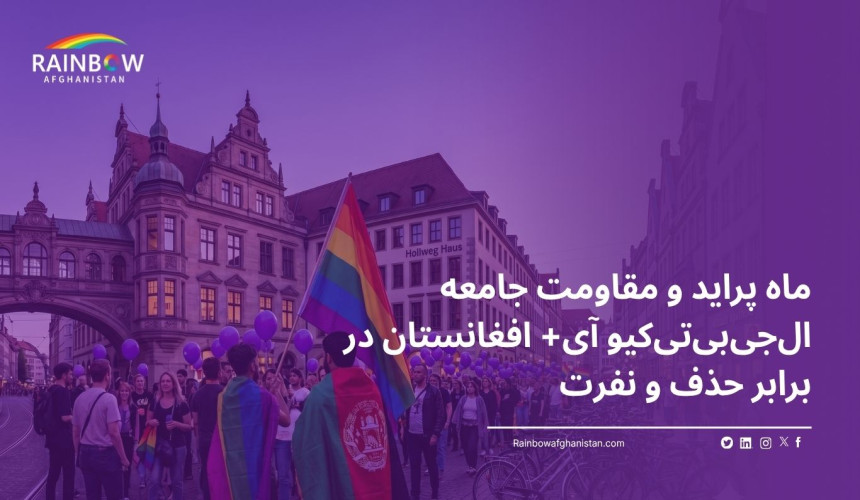
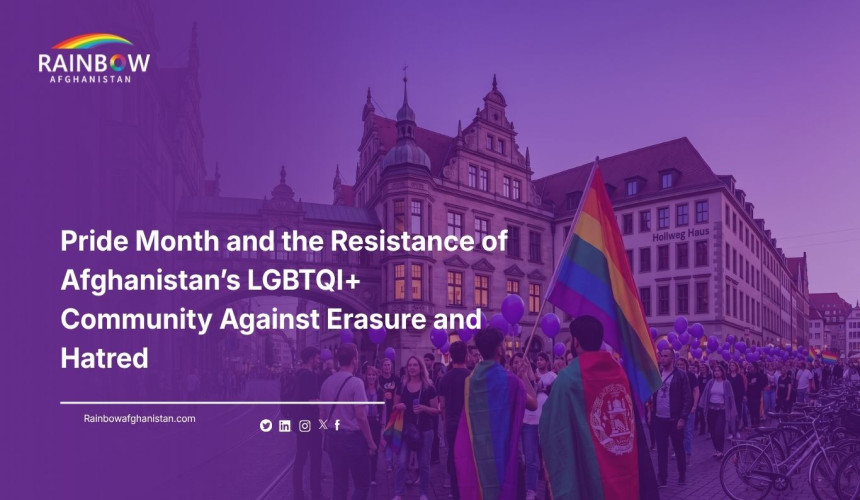
Pride Month and the Resistance of Afghanistan’s LGBTQI+ Community Against Erasure and Hatred
The historical roots of Pride Month trace back to the protests of June 1969 in New York City, when clashes erupted between police forces and LGBTQI+ individuals at one of the well-known bars where gay people gathered. This event became a symbol of resistance against oppression and discrimination and later became known as the Stonewall Riots. Pride Month represents the struggles and resilience of the LGBTQI+ community in the face of discrimination and inequality — a month that reminds the world that the LGBTQI+ community proudly exists and deserves to be recognized.
Despite this historical legacy, the situation of LGBTQI+ people is not the same across all societies. In many parts of the world, members of this community are still not only denied recognition, but are continuously subjected to discrimination and violence.
While in many societies Pride Month is celebrated through various activities such as dancing, cultural discussions, public awareness campaigns, and protest marches to ensure LGBTQI+ people are seen and accepted, in Taliban-controlled Afghanistan, being visible as an LGBTQI+ person means being exposed to direct danger — from family rejection to arrest, torture, public corporal punishment, and even death.
Since 2021, public corporal punishments against LGBTQI+ individuals have been carried out in widespread and inhumane ways. These punishments not only violate human rights and human dignity, but are also used as tools of pressure, forced identity suppression, and coercion to conform to traditional and social norms.
One LGBTQ individual, in testimony shared with Rainbow Afghanistan, stated that the Taliban repeatedly subjected him to torture and sexual abuse in an attempt to “correct” him and force him to change his identity and appearance to align with traditional and social expectations.
Members of the LGBTQI+ community in Afghanistan are not only rejected and discriminated against by structures of power and society, but are also often rejected by their own families and subjected to severe physical and psychological violence. As a result, many are left homeless, deprived of emotional and economic support, and pushed toward some of the most dangerous means of survival.
One transgender woman shared in her testimony that after being rejected by her family, she was forced to beg on the streets of Kabul in order to meet her basic needs. Another woman stated that due to extreme economic hardship and the struggle to survive, she was forced to perform in informal bacha bazi gatherings and was eventually pushed into informal sex work.
In addition, denial of education, social exclusion, unemployment, and widespread discrimination in employment continue to place many LGBTQI+ individuals in Afghanistan in severe economic hardship and prevent them from meeting their most basic needs, leaving them in even more vulnerable conditions.
Hate-driven attitudes have long shaped the lives of many LGBTQI+ individuals in Afghanistan, forcing them to hide their identities in order to survive. Four years after the Taliban’s return to power, the situation for LGBTQI+ people has become even more dangerous and oppressive. By institutionalizing punishment against LGBTQI+ individuals, the Taliban have further deepened fear, hatred, and discrimination, while normalizing violence and discriminatory behavior against the LGBTQI+ community.
But the painful truth is that violence against Afghanistan’s LGBTQI+ community does not come only from the Taliban. Hatred, homophobia, and the systematic erasure of LGBTQI+ people have been deeply rooted for years within large parts of Afghan society — both inside the country and across the diaspora. Many people, media outlets, activists, and even some organizations that speak daily about “human rights,” “freedom,” and “women’s rights” still describe LGBTQI+ people as “immoral,” “deviant,” “un-Islamic,” and “against Afghan culture.”
A society that cries out for justice while denying the existence of part of its own people still remains far from the true meaning of human rights. Human rights are not selective.
One cannot speak about freedom, justice, and human dignity while simultaneously humiliating, erasing, or treating LGBTQI+ people as shameful.
Many Afghan organizations — both inside Afghanistan and in the diaspora — as well as Afghan activists and individuals who present themselves as defenders of human rights, continue to reproduce the same language of hatred and exclusion against Afghanistan’s LGBTQI+ community, only now with a more modern appearance and a more polite silence. The silence and deliberate ignoring of the suffering of LGBTQI+ Afghans is itself part of this structural discrimination.
For years, Afghanistan’s LGBTQI+ community has been erased even from the broader narratives about Afghanistan — as if their suffering, imprisonment, torture, and killings are somehow “not worth mentioning.” While many activists speak about discrimination, gender apartheid, and Taliban violence, very few are willing to openly address the catastrophic situation of LGBTQI+ Afghans. The fear of social backlash, religious judgment, and cultural pressure continues even outside Afghanistan.
Even after fleeing Afghanistan and seeking refuge in other countries, many Afghan LGBTQI+ individuals are still forced to hide their identities. Within the diaspora, they often continue to face insults, rejection, hatred, and social isolation — not only from parts of the Afghan migrant and refugee community, but sometimes even within spaces that claim to support human rights.
For many LGBTQI+ Afghans, migration did not mean the end of fear; it only changed the geography of fear.
Meanwhile, transgender, lesbian, gay, bisexual, and queer Afghans continue to live under conditions of poverty, homelessness, employment discrimination, discrimination in access to services from institutions and organizations, psychological trauma, and insecurity. Many are forced to hide their identities, abandon their education, work in informal sectors, or live in complete isolation simply in order to survive.
During this Pride Month, we, the Afghan LGBTQI+ community at Rainbow Afghanistan — both inside Afghanistan and across the diaspora — once again remind the world that despite all this violence, we are still standing.
We still exist.
We still resist.
We have not silenced our voices.
For us, Pride is not merely a colorful symbol or a celebration.
For us, Pride is a struggle for survival.
A struggle for the right to be seen.
The right to be recognized as human.
The right to live without fear.
The right to dignity, freedom, and safety.
We are not shame.
We are not deviation.
We are part of Afghan society. We have lived among you, grown among you, and always existed among you — even within a society that has spent years trying to hide, silence, and erase us.
But we have not disappeared.
Pride Month is a reminder that no society can become truly free and just without embracing human diversity. And as long as even one person is humiliated, threatened, or erased because of their sexual orientation or gender identity, the struggle for human rights remains unfinished.
And finally, we say this: you will eventually be forced to confront our existence, because we are everywhere — even within families that believe no LGBTQI+ person exists among them.
Links: