Details
- Home
- Details
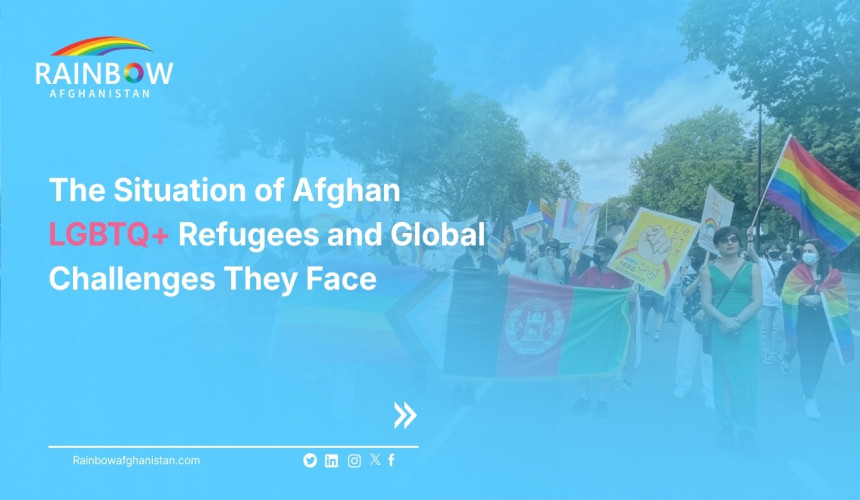
The Situation of Afghan LGBTQ+ Refugees and Global Challenges They Face
The United Nations designated June 20th as World Refugee Day in 2000. This day is observed annually to honor the courage and resilience of millions of people around the world who have been forced to flee their homes. It aims to draw global attention to the situation and the widespread challenges refugees face.
Celebrating this day reflects the reality that millions of people have been forced to leave their homes and countries due to war, violence, persecution, and violations of basic human rights, including those related to identity and sexual orientation. Regardless of their identity, gender, sexual orientation, ethnicity, religion, or beliefs, all refugees deserve support, respect, and the full enjoyment of human rights and human dignity.
World Refugee Day is being observed at a time when a number of Afghan asylum seekers in different countries around the world are facing the risk of forced deportation, and the process of returning them to Afghanistan is increasing. At the same time, their deportation to Afghanistan could endanger their lives and security.
In Taliban-controlled Afghanistan, millions of people face oppression and systematic violence, and half of the population is deprived of basic rights such as education, work, and freedom. The LGBTQI+ community is also criminalized because of their identity and continues to face widespread human rights violations. They are at risk of being identified by the Taliban, subjected to arbitrary arrest, torture, imprisonment, and even death.
As a result, many LGBTQI+ individuals have been forced to flee Afghanistan to protect their lives and seek safety, taking refuge in neighboring countries such as Iran, Pakistan, and Turkey. Unfortunately, these countries are not safe for them either, as they face daily discrimination, rejection, and harassment, and are often forced to conceal their identities.
At present, hundreds of Afghan LGBTQI+ refugees in Pakistan remain in a state of uncertainty and insecurity, while their asylum cases in European countries, including Germany- which had previously committed to accepting them- are experiencing significant delays.
LGBTQI+ individuals in Pakistan also face numerous challenges, and many have reported experiences of rejection, discrimination, verbal abuse, and degrading treatment from parts of society and, in some cases, state institutions. These conditions, combined with the fear of forced deportation to Afghanistan, have placed additional psychological and social pressure on these refugees.
While civil society organizations continue to emphasize the need to create safe and special migration pathways for LGBTQI+ individuals who are persecuted and harassed solely because of their identity, many still face serious barriers in accessing protection and asylum. As a result, opportunities for them to build a safe and dignified life remain extremely limited.
Afghan LGBTQI+ refugees do not only face danger in their home country; they also encounter serious risks during their journeys to seek safety. Many are forced to take dangerous migration routes, where they face violence, abuse, assault, detention, and the threat of deportation. A significant number also spend months or even years in refugee camps in legal limbo, with limited access to essential services such as education, healthcare, and employment opportunities.
World Refugee Day is not only an occasion to remember the suffering and hardships of millions of displaced people, but also a reminder of the shared responsibility of governments, international organizations, and human rights institutions toward those who have been forced to flee their homes.
On this day, we call on governments and relevant institutions to uphold their international commitments to refugees, accelerate the processing of asylum cases for people at risk- especially LGBTQI+ individuals- and prevent any forced returns of those whose lives and freedoms are in danger.
No one is safe until everyone is safe.