Details
- Home
- Details
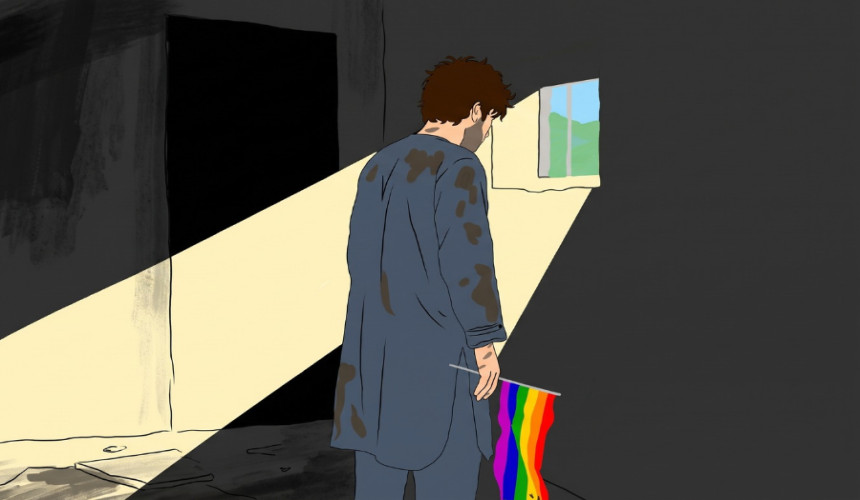
In Search of Safety: Almas’s Story of Life Amid Discrimination and Insecurity
Almas is a pseudonym used to protect the narrator’s identity and safety. With the narrator’s consent, some identifying details have been removed or generalized without altering the nature of the experiences described.
Almas faced questions about their identity from childhood and adolescence, questions she did not clearly understand at the time, and she did not know why or how they had come about.
“My pseudonym is Almas. During my adolescence, I experienced feelings that I did not understand. They were mostly connected to behaviors and interests that were associated with girls and women, such as wanting to wear women’s clothes, put on makeup, grow my hair long, and play with girls. These were things that were different from what was expected of boys.
At the time, I did not understand these feelings or know why I had them. Perhaps this lack of understanding made it difficult for me to accept myself, and I suffered deeply because of these experiences. I was constantly told, and expected, to see myself as a man. I kept asking myself, ‘If I am a man, why do I have feminine behaviors and interests?’ I lived with this question for years without finding an answer.”
Under Suspicion: Facing Judgment and Rejection
As time passed, changes in the way Almas looked and behaved became increasingly noticeable to those closest to them and a source of concern within the family. According to Almas, the abuse, harassment, and violence they experienced because of their identity began at home. Over time, friends and others in their community also began to notice their appearance and behavior, subjecting them to intrusive questions and judgment.
“My sister, who is only one year younger than me, was the first person to notice that the way I looked and behaved was different from what was traditionally expected of boys. When I wore her clothes or put on makeup, she would become worried and tell me that these things were not suitable for me. Several times, she complained to my brothers that I would eventually bring shame on them if I continued dressing and presenting myself that way.
After my sister, my eldest brother, who is a very extreme person and oversees all of our family's decisions, grew suspicious of my appearance and identity. He demanded to check my phone. When he opened my gallery, he found images related to trans people. Furious, my brother said, "What are these pictures doing on your phone? Do you want to destroy our reputation?" Then he smashed my phone on the ground, breaking it, and beat me severely.
My brother locked me in a storage room where we kept old belongings. My mother pleaded with him for two days before he finally let me out.
Outside my home, my friends and others gradually began to notice my appearance as well. They would ask me, ‘Why do you walk like a girl? Why is your voice so soft? Why are you so feminine?’ They asked hundreds of other questions- questions that, at the time, even I had no answers to.”
From Confusion to Self-Acceptance: Almas’s Journey of Self-Discovery
A lack of sufficient awareness about sexual orientation, gender identity, and gender expression, along with other factors, can lead to the formation and reinforcement of stereotypes and discrimination against LGBTQ+ people.
In traditional and conservative settings such as Afghanistan, this lack of awareness can contribute to rejection, pressure to change one’s identity or sexual orientation, pathologization, isolation, anxiety, and ongoing discrimination. When people also lack access to effective protection and support, these conditions can increase their vulnerability to sexual abuse.
“When I was still a teenager, I was trying to understand my feelings and identity while facing pressure and violence at home. During that time, I was sexually abused by one of my relatives. It was one of the most painful experiences of my life. When I returned home, my mother realized that something was wrong, and I had to tell my family what had happened.
My brother initially went looking for the person who had raped me, but he could not find him. He then turned his anger on me and tried to kill me. My mother stopped him and insisted that I was not responsible for what had happened.
My brother said, ‘I thought that one day you would become a man and take responsibility for our family, but you have constantly brought shame on us.’”
“There was almost no awareness of the LGBTIQ+ community in Afghanistan. The only issue people talked about was ‘Bacha Bazi,’ and sometimes LGBTIQ+ people were mistakenly associated with it. I was also afraid that I might become a victim of this practice. Later, by reading more on social media, I realized that there were many people like me living in other countries who had similar experiences in understanding their gender identity and sexual orientation. Through social media, I learned more about gender identity and sexual orientation and gradually came to better understand my own identity. Eventually, I identified myself as a transgender person.”
Almas has expressed concern about LGBTQ+ people being mistaken for the phenomenon of "Bacha-Bazi" (child sexual exploitation). It should be emphasized that these two concepts are fundamentally different in meaning and nature. "Bacha-Bazi" refers to the sexual abuse and exploitation of children, whereas sexual orientation and gender identity are different concepts and, in themselves, have no connection to the sexual abuse of children.
Detention and torture by the Taliban
Arbitrary arrests, harassment, and torture of LGBTQI+ individuals because of their sexual orientation or gender identity are among the human rights violations committed against LGBTQI+ people in Afghanistan under Taliban rule. Human rights reports indicate that these individuals face the risk of arrest, harassment, violence, and severe punishments by the Taliban because of their sexual orientation or gender identity. [1]
“In 2022, while I was working in the hijama and massage section of a private clinic, a Taliban member came to the clinic for hijama and made a sexual advance toward me. I refused.
A few days later, I was detained by the Taliban even though I had committed no crime. I spent 15 days in a Taliban detention facility, where I was beaten and tortured. I did not know what would happen to me or what they would do to me. Eventually, they forced me to sign a written undertaking promising that I would no longer work in massage, and then they released me.
I was released from detention, but I have still not been free from the physical and psychological impact of those 15 days.”
Almas says they worked hard to achieve financial independence and build a life of their own. Despite the taunts and judgment they faced, they completed school, earned a bachelor’s degree in engineering, and worked in different settings. Yet financial and professional independence did not protect them from discrimination, humiliation, and violence from their family, society, or the authorities.
“I have a bachelor’s degree in engineering. I worked both before and after the Taliban returned to power, and I was financially independent. But my efforts to build an independent life and earn my own income could not shield me from the discrimination and abuse I faced because of how I expressed myself.
After everything I had experienced, I decided to leave Afghanistan because of the pressure from my family, society, and the authorities. I fled to Iran in early 2023.”
From Abduction in Iran to Insecurity in Pakistan
Following the Taliban’s return to power in Afghanistan, many LGBTQI+ individuals fled to neighboring countries, such as Iran and Pakistan, seeking refuge. However, for many of them, leaving Afghanistan has not meant reaching safety. Sources indicate that Afghan LGBTQI+ individuals seeking refuge in neighboring countries continue to face a high risk of persecution in those countries as well. [2]
“I was living under extremely difficult conditions in Iran. After meeting someone who identified as gay, I began working for a private company. A few weeks later, while I was returning from work to where I was staying, six armed men abducted me and demanded $80,000 from my brother in exchange for my release.
My brother told them, ‘I don’t have the money. You can kill them.’
When the abductors realized that my family could not or would not pay the ransom, they forced me to participate in illegal activities with them. One night, while everyone was asleep, I tried to escape. I climbed down from the sixth floor to the third floor and then jumped. I broke both of my legs in the fall. Despite my injuries, I dragged myself to a safe place.
The following day, I went to the Iranian police and asked for help, but they did not assist me. I eventually returned to Afghanistan through unofficial routes without legal authorization.
In Afghanistan, no one in my family was willing to help me except my mother. In late 2023, with the support of an organization assisting LGBTIQ+ people, I travelled to Pakistan. After my six-month visa expired, the Pakistani authorities did not renew it. I was detained by the police several times and released after paying between 4,000 and 8,000 Pakistani rupees. At the time, this was roughly equivalent to 1,000 to 2,000 Afghanis.
I am also living in very difficult and unsafe conditions in Pakistan. Here, too, I am judged because of my identity and appearance, and I cannot move around freely. Local people, and even police officers at checkpoints, harass me. Sometimes they ask for my WhatsApp number and make sexual requests.
“At the same time, I have no legal status in Pakistan and do not know what will happen to me. I am exhausted by this situation, and sometimes I have suicidal thoughts.”
Almas's story is not the story of one individual alone; it is an example of the experience of many LGBTQ+ people who, as a result of discrimination, detention, violence, and targeted harassment, have been forced to leave Afghanistan and seek refuge in neighboring countries. However, life in neighboring countries does not necessarily mean finding safety either. Many of these people, amid the difficult conditions of migration and asylum-seeking, face insecurity, legal restrictions, discrimination, and limited access to protection and services.
Links: