Details
- Home
- Details
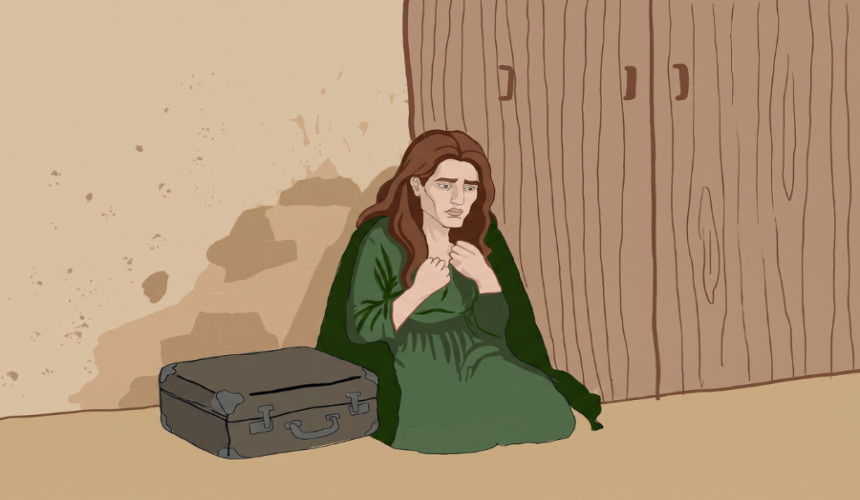
I Lost My Home, Not My Identity
The Story of Sita, a Transgender Woman
Sita*, a 24-year-old transgender woman from Afghanistan, speaks in her story about years of discrimination, family and social rejection, physical and psychological violence, and exclusion from educational and employment opportunities. Her life has been marked by restrictions and social pressures since childhood, which intensified after her gender identity was unintentionally revealed and eventually forced her to leave her home and live in unsafe conditions.
Sita describes experiences that have not only affected her safety and independence but have also changed the way she views herself and her gender identity. Despite these challenges, she emphasizes that her gender identity is an inseparable part of who she is.
"Since childhood, I had feminine mannerisms and interests. I was always interested in being friends with girls, and I loved playing with them. In the afternoons, when the neighborhood girls gathered in the courtyard to play, I was one of them. Sometimes I dressed their dolls, and sometimes I told them stories. Those friendships were where I felt most at ease.
But when I reached adolescence, everything changed. My friends' mothers began keeping their daughters away from me. They told them that I was a boy, and that boys and girls should not be friends or play together. I remember the day one of my closest friends, who used to come to our house every day, simply stopped coming. When I asked her why, she lowered her head and said nothing. I did not understand what I had done wrong. I felt rejected, and for the first time I learned that who I was made others see me as a problem."
Sita says that at the age of 14, she gained a clearer understanding of her gender identity, a realization that initially brought her a sense of peace and contentment. However, ongoing experiences of humiliation, harassment, and discrimination gradually took away that sense of peace and changed the way she viewed herself.
"My family considered me a boy, but my interests and feelings had nothing in common with those of boys. I wanted to try on girls' clothes, shoes, and makeup, and to play with girls. When I was home alone, I would secretly put on my sister's clothes and stand in front of the mirror.
At the age of fourteen, I realized that my true identity was different from what my family and society had assigned to me. At first, this discovery brought me peace; for the first time, I felt I knew myself and was at peace with who I was.
But that peace did not last. My classmates called me "Izak" and mocked me. Every time I entered the classroom, I could hear their laughter and whispers behind my back. Each time I was abused for being transgender, something inside me broke. Gradually, instead of blaming society, I began to hate myself."
Sita's experience illustrates how social rejection, humiliation, and ongoing violence can affect a person's sense of self-worth and relationship with their own identity. In social psychology research, the concept of minority stress is used to explain the psychological pressure resulting from social stigma, discrimination, the expectation of rejection, and the need to conceal one's identity.[^1]
In Sita's story, these pressures are evident in her everyday experiences, from the school environment to family relationships. What has caused her suffering and feelings of self-rejection is not her gender identity, but rather the discriminatory treatment and violence she has experienced because of that identity.
Unwanted Disclosure and Family Violence
Even before her gender identity was revealed, Sita had already experienced humiliation and abuse within her family. However, according to her, the unwanted disclosure of her identity led to an escalation of family violence and further threatened her safety.
In an effort to escape isolation and connect with people who had similar experiences, she met several transgender individuals and began joining them in dancing at certain gatherings. This activity provided her with an opportunity to build social connections and earn a small income. However, it also exposed her to risks, including being filmed without her consent and threatened with the release of those videos.
Sita recounts one of her experiences as follows:
"After joining the transgender community, I met other people and, at some gatherings, I danced alongside them. In return for dancing, I received a small amount of money. But those gatherings were not always safe. Sometimes some of the attendees filmed my dancing, and then pressured me by threatening to publish the videos.
At school, too, I faced many problems. My classmates called me "Izak," a derogatory slur, and mocked me. Even some of my teachers made inappropriate sexual demands of me."
Note: The term “Izak” is quoted in this story as an offensive and derogatory expression. Using such language to address individuals violates respect for their human dignity.
Sita says that constant humiliation, threats, and feelings of insecurity placed her under severe psychological distress. She recalls days when the intensity of her suffering and loneliness led her to ask painful questions about her life and how she was different from others.
“Sometimes I asked myself: Why did God create me this way? Why am I different from everyone else? Sometimes I wished I were a stone, so that at least people would not be able to hurt and torment me.
One day, my cousin encountered a transgender person in our neighbourhood and mocked them for attending gatherings and dancing. That person also knew me. They showed my cousin videos of me dancing and said, ‘Instead of mocking me, you should mock your own cousin.’
After that, my cousin told my family. My father and uncles tied my hands and feet with chains and beat me so severely that I could not walk properly for a long time. They wanted to force me to abandon my identity, even though it was an inseparable part of who I am.”
According to Sita, her family members repeatedly subjected her to physical and psychological violence because of her gender identity. She says her family tried to force her to live according to their expectations through threats, beatings, and severe restrictions.
The violence was not limited to physical abuse. Sita was repeatedly forced out of her home, and her return was conditional on accepting her family’s demands that she change her gender identity.
She says:
"My family is deeply conservative and strongly influenced by the traditional beliefs of society. They beat me many times and threw me out of the house, and I was only allowed to return if I changed my true self, or, in their words, if I was "corrected." But that was impossible for me. I was born transgender, and my identity is part of who I am; it is not something that can be changed like clothing."
Eventually, Sita was forced to leave the home that should have been a place of safety and support for her. Family rejection deprived her not only of shelter but also of one of the most important sources of social and financial support.
Dancing: Both a Means of Survival and a Source of Danger
After leaving her home, Sita faced serious economic difficulties in meeting her basic needs. Due to discrimination and limited access to educational and employment opportunities because of her gender identity, she turned to dancing at social gatherings as a way to earn an income.
According to Sita, following the Taliban's return to power in August 2021, continuing this activity became more difficult and dangerous. Social restrictions and the fear of being identified and arrested also affected her already limited opportunities to earn a living.
She says that because of her gender identity, she has constantly feared being identified by the Taliban and has been afraid of possible arrest, torture, and even being killed.
“I was forced to leave home and live on the streets for a while. To cover my basic living expenses, I started dancing at gatherings again. I was always afraid that the Taliban would identify and detain me, but I had no other choice. Dancing was the only way I could survive. During this time, I met a man named Ramez* and entered into a relationship with him.”
The experience of homelessness, lack of a stable income, and the absence of family support had placed Sita in a situation where meeting her basic needs had become difficult.
According to her account, after meeting Ramez, a relationship developed between them in which her partner took responsibility for covering her living expenses and accommodation. Initially, this financial support allowed Sita to stop dancing at social gatherings and have a place to live.
However, her dependence on the continuation of this relationship for both accommodation and financial support increased her economic vulnerability. Sita says that after the relationship ended, she felt that her trust and difficult living circumstances had been taken advantage of.
She describes this experience as follows:
“I was in contact with him for some time. He asked me to stop dancing at social gatherings and said that, in return, he would cover my living expenses. He even rented a room for me, and later we started living together. Gradually, we developed feelings for each other and entered into a romantic relationship.
However, Ramez cheated on me several times and had relationships with other women. When I confronted him about his behaviour, he decided to end our relationship. Later, I realised that he had been taking advantage of me from the very beginning. This was extremely painful for me, and I became emotionally devastated.”
According to Sita, after their separation, Ramez forced her to leave the room he had rented for her, and she once again lost her shelter.
This experience illustrates how financial dependence and the lack of independent housing can place individuals in vulnerable positions within personal relationships, particularly when access to family support, employment opportunities, and social services is limited.
After some time, Sita managed to find temporary shelter with one of her relatives. However, according to her, the fear of being identified and arrested by the Taliban, as well as the possibility of experiencing family violence again, remains part of her everyday life.
Living in the Shadow of Discrimination: An Identity That Did Not Change
Sita’s story illustrates how discrimination based on gender identity can intersect with family violence, exclusion from education and employment, homelessness, and financial dependence, putting an individual’s safety, independence, and human dignity at risk.
Her experiences extend beyond physical violence. Family rejection, humiliation in educational settings, threats to share personal videos, economic exclusion, and the constant fear of being identified and arrested are among the different forms of harm she has experienced throughout her life.
This story also highlights the importance of ensuring that transgender people in Afghanistan have access to safe and confidential support, equal educational and economic opportunities, shelter, and effective protection mechanisms against violence.
Through documenting stories such as Sita’s, Rainbow Afghanistan Organization seeks to reflect the human rights situation of LGBTQI+ people in Afghanistan through their own voices and document experiences that often remain untold due to fear, discrimination, and security risks.
Sita has lost her home and her family’s support, but in her story, she emphasizes that her gender identity is not something that can be changed through threats, violence, or rejection.
Note on Confidentiality
Sita and Ramez are pseudonyms. To protect the narrator’s safety and confidentiality, some identifying details have been changed. This story was prepared based on a direct interview with the narrator and documentation available to Rainbow Afghanistan Organization.
Link: